KNM Topic
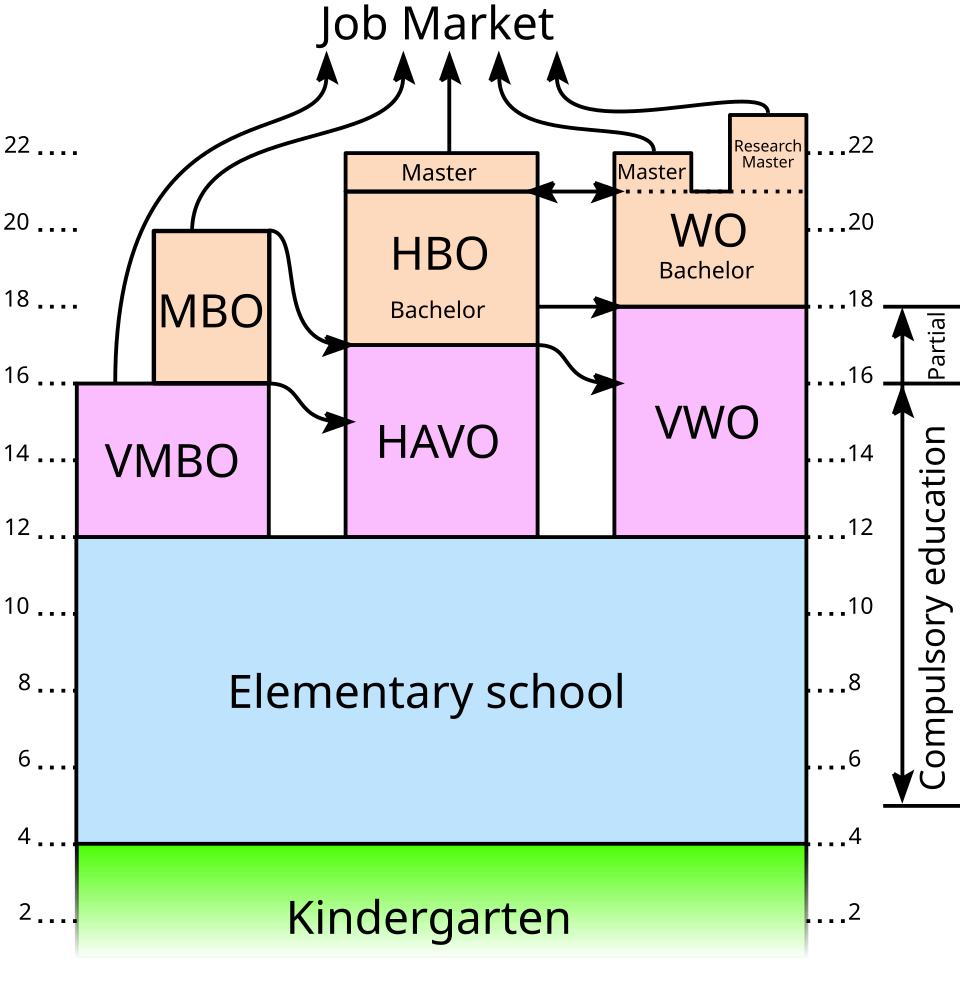
The Dutch Education System
How schools work in the Netherlands — from primary school to university, including compulsory education rules and student finance.
Compulsory Education (Leerplicht)
The Netherlands has strict rules about school attendance:
- Children can start school at age 4 (optional)
- Children must start school at age 5 — this is verplicht (mandatory)
- Children must stay in school until at least age 16
- After 16, there's kwalificatieplicht until 18 (must have a diploma or be in school)
This system is called leerplicht (compulsory education).
Dutch Education Pathways
The Three Secondary School Pathways
- VMBO (4 years, ages 12-16) → MBO (vocational education) → Job Market
- HAVO (5 years, ages 12-17) → HBO (applied university, Bachelor/Master) → Job Market
- VWO (6 years, ages 12-18) → WO/University (research university, Bachelor/Master) → Job Market
Important Rules for the Exam
- With a VMBO diploma, you cannot go directly to university
- From groep 8 (last year of primary school), you can go to VMBO, HAVO, or VWO
- You can go to HAVO directly after basisschool (but not HBO or MBO directly)
Student Finance (Studiefinanciering)
- Apply at DUO for student loans and grants
- Available for MBO, HBO, and WO students
Slagen (Passing/Graduating) — Vlag met Tas
When someone graduates (iemand is geslaagd), the Dutch tradition is to hang a flag with a school bag (vlag met tas) from the window. This shows that someone has passed their final exams (eindexamen). If you see this outside a house, someone there has graduated.
Want the complete guide?
Get the latest updated KNM resources — including vocabulary lists, exam tips, practice questions, and all remaining sections for Education.
Always up-to-date with the latest KNM exam content