The Dutch Education System
How schools work in the Netherlands — from primary school to university, including compulsory education rules and student finance.
Last updated:
Compulsory Education (Leerplicht)
The Netherlands has strict rules about school attendance:
- Children can start school at age 4 (optional)
- Children must start school at age 5 — this is verplicht (mandatory)
- Children must stay in school until at least age 16
- After 16, there's kwalificatieplicht until 18 (must have a diploma or be in school)
This system is called leerplicht (compulsory education).
Dutch Education Pathways
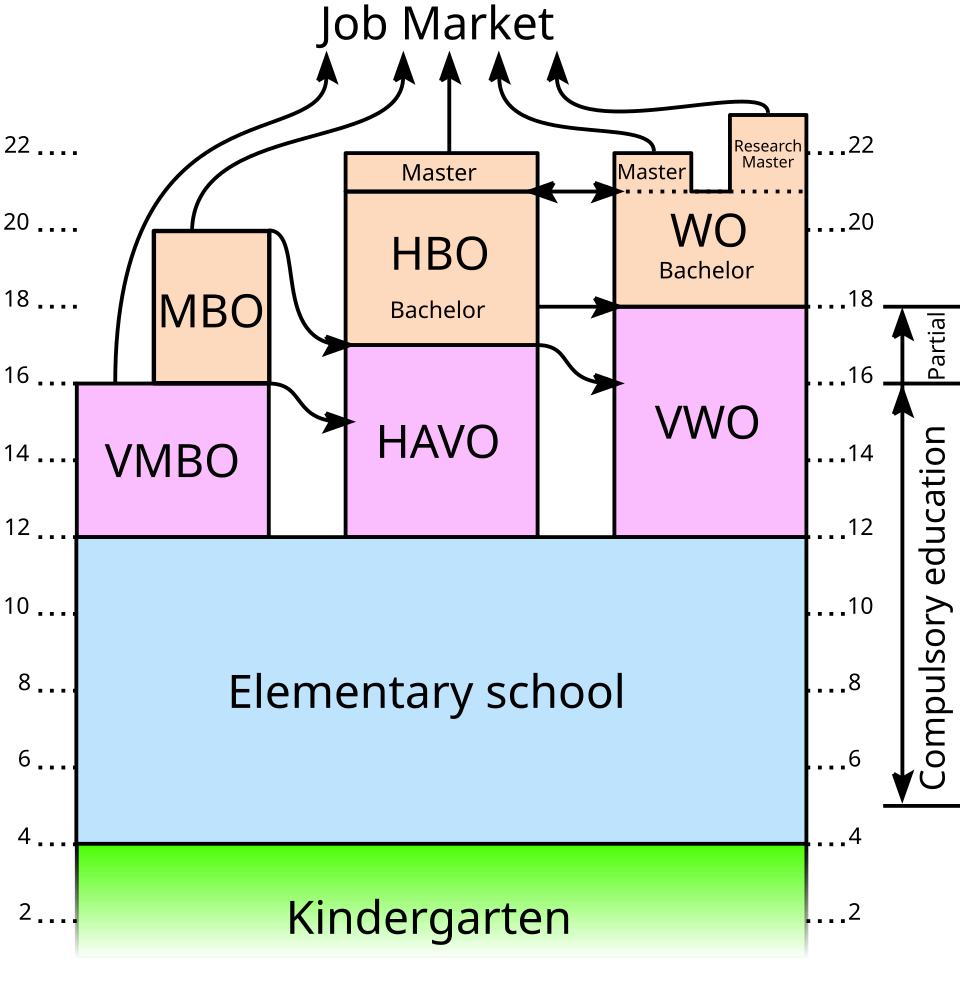
The Three Secondary School Pathways
- VMBO (4 years, ages 12-16) → MBO (vocational education) → Job Market
- HAVO (5 years, ages 12-17) → HBO (applied university, Bachelor/Master) → Job Market
- VWO (6 years, ages 12-18) → WO/University (research university, Bachelor/Master) → Job Market
Important Rules for the Exam
- With a VMBO diploma, you cannot go directly to university
- From groep 8 (last year of primary school), you can go to VMBO, HAVO, or VWO
- You can go to HAVO directly after basisschool (but not HBO or MBO directly)
Student Finance (Studiefinanciering)
- Apply at DUO for student loans and grants
- Available for MBO, HBO, and WO students
Slagen (Passing/Graduating) — Vlag met Tas
When someone graduates (iemand is geslaagd), the Dutch tradition is to hang a flag with a school bag (vlag met tas) from the window. This shows that someone has passed their final exams (eindexamen). If you see this outside a house, someone there has graduated.
Want the complete guide?
Get the latest updated KNM resources — including vocabulary lists, exam tips, practice questions, and all remaining sections for Education.
Always up-to-date with the latest KNM exam content
Frequently Asked Questions
At what age is school mandatory in the Netherlands? +
Children can start school at age 4 (optional) but must start at age 5 — this is verplicht (mandatory). Children must stay in school until at least age 16. After 16, there is kwalificatieplicht until age 18: you must have a diploma or stay in school.
What are the three main secondary school pathways? +
VMBO (4 years, ages 12–16) leads to MBO (vocational education). HAVO (5 years, ages 12–17) leads to HBO (applied university). VWO (6 years, ages 12–18) leads to WO / research university. Each pathway prepares students for a different level of higher education or the job market.
Can I go directly to university with a VMBO diploma? +
No. With a VMBO diploma you cannot go directly to university. You must complete MBO first. From the last year of primary school (groep 8), pupils choose between VMBO, HAVO, or VWO.
Where do I apply for student finance? +
Apply at DUO for student loans and grants (studiefinanciering). Student finance is available for MBO, HBO, and WO students.
What does vlag met tas mean? +
When someone passes their final exams (eindexamen), the Dutch tradition is to hang a flag with a school bag (vlag met tas) from the window. It signals that the student is geslaagd — they passed.
Official sources
- Rijksoverheid — Onderwijs (education)↗
- DUO — Student finance and study loans↗
- OCW — Ministry of Education↗
Information on this page is summarised for study purposes. Refer to the official sources above for binding rules and current details.